
September is both Suicide Awareness Month and Recovery Month. These are topics that are important to me for two reasons. One, they are a big part of my career as a Licensed Clinical Professional Counselor and Certified Alcohol and Drug Counselor. And two, as part of the human experience of suffering — the range of desperation and the recovery from something — those are things we can relate to on some level.
Suffering Happens in Silence
The truth is, suffering happens in silence. People hold their suffering in, tearing themselves apart and from the people who care about them. Perception can be murky because of past experiences, emotions, distorted beliefs, lies, agendas, and fears. It hurts. And pain is something we avoid.
Freud knew this as a psychoanalyst. It is instinctive. We stay away from the hot oven once we are burned, physically. Yet knowing the oven is hot does not mean we cannot approach it differently if there is a treasure we seek, right? What if something is there we want? What do we do then?
What Blocks Us From Talking About What We Need
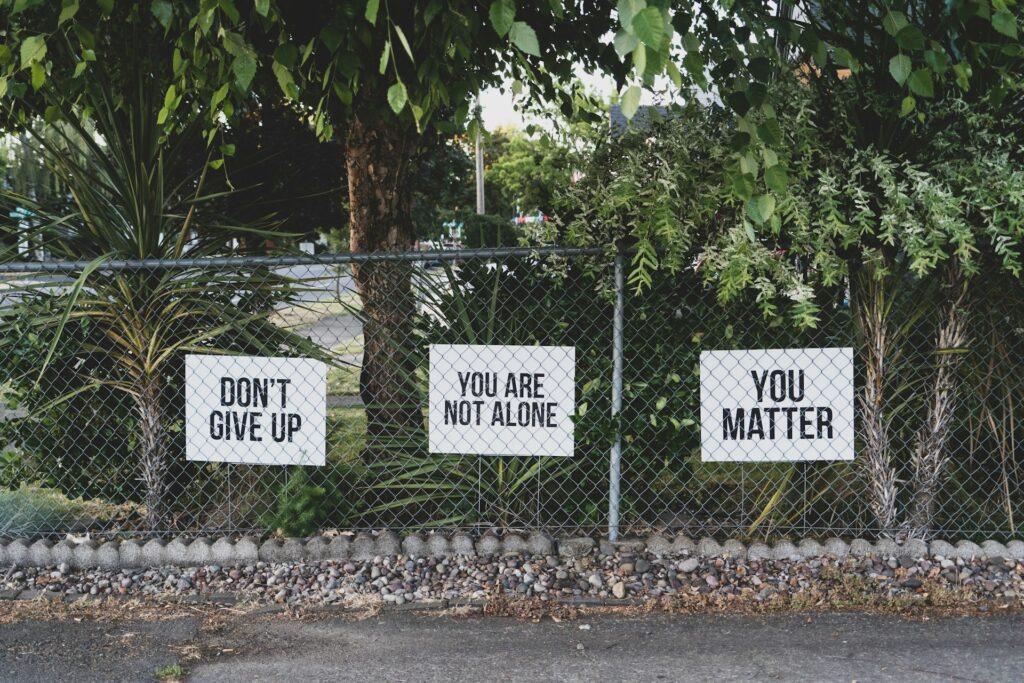
We do not always talk about the things we need or want to talk about, and there are several reasons for that.
Pain and the Fear of Judgment
Pain is one of them. Judgment is another. When we are vulnerable, there is a myth — a perception — that this is weakness. In my experience, when I have shared my truth, I have found it to be empowering. It is something I can stand on, regardless of what that truth is. It is better than some murky half-lie that needs fuel, reminders, and threads to hold it together.
I have recognized that judgment comes from people who have been judged, have not held their own truth, or have not had the opportunity to uncover, discover, or recover their truth. That can be painful. It can also require compassion.
Not Knowing How to Name the Pain
A third possibility is that we do not know how to talk about the things we need or want to. It might be not knowing how to identify what it even is. A feeling? A need?
When we hurt physically, it is easy to point at the cut and show the blood — something is hurting. But mental, emotional, spiritual, existential, familial, and other types of non-visible injuries are more challenging. How do you point to that and show a split in your heart or spirit, or energy bleeding out? How does a band-aid or some ointment heal that? That is something we need to learn how to do; it is a skill to cultivate. It can take time or the right person to show us how.
Past Experiences and the Erosion of Trust
Past experiences teach us too. If we have been hurt before — betrayed, humiliated, shamed, invalidated, cast aside, or punished — for sharing our despair, a need, or a feeling, we may be hesitant, cautious, or outright cut off from doing so again.
Trusting is harder after that. Trust involves consistency. It also involves simplicity, clarity, and follow-through. It is a pattern. When we connect the dots between our past experiences and the outcomes, we may discover what connects to why we are or are not vulnerable. Strangely, this may also follow one of the universal laws of attraction or abundance.
I will not go into too much detail here about these universal laws, as this post is focused on the blocks to vulnerability. But if you are curious about the possible connections, the podcast goes deeper on that.
Conditioning — The Deepest Block
A final reason we may not talk about what is needed is conditioning. This is a significant one, as we are all conditioned to some level. Freedom is really living without these conditions. I am working toward that, day by day.
We have social, cultural, individual, religious, gender, environmental, and cognitive conditioning. Another way to think about this is that conditioning is limitations. And in many ways, conditions connect to the universal laws of abundance and attraction.
The Weight of These Blocks in Suicide Awareness and Recovery
In the context of Suicide Awareness Month and Recovery Month, these blocks carry even greater weight. When someone is suffering in silence — unable to name their pain, afraid of judgment, shaped by past experiences and conditioning that tell them it is not safe to speak — the path toward help becomes harder to find.
Recovery, in any form, begins with the willingness to say something is not right. That is not weakness. That is courage.
Hear More on the Podcast
I am going to stop here for now, as the podcast continues about this topic. To hear more about the connection between suffering, suicide awareness, recovery, and the universal laws of attraction and abundance, check out this month’s episode.
And be sure to join the livestream on September 15th and 29th as my guest speaker joins the dialogue.
If this resonated with you and you are ready to explore what vulnerability or recovery might look like in your own life, a free consultation is a good place to start.
If you or a loved one are experiencing a crisis, mental health emergency or need support, contact the 988 Suicide & Crisis Lifeline. Call, text or chat online.